Lab-grown diamonds are becoming an increasingly popular choice for engagement and wedding rings. Read this guide to find out how these man-made stones compare to natural diamonds, from how they’re made to what couples should consider before buying

(Photo: Connor Barrett)
If you’ve started shopping for an engagement ring or wedding jewellery, you’ve probably come across lab-grown diamonds. These man-made stones are becoming increasingly popular with couples across Scotland thanks to their lower price point and identical appearance to natural diamonds.
But what exactly are lab-grown diamonds? Are they more ethical? Why do they cost less? And how do they compare to traditionally mined stones?
What is a lab-grown diamond?
Natural diamonds form deep within the Earth over billions of years under intense heat and pressure. They are mined from rock deposits before being cut and polished for use in jewellery.
A lab-grown diamond, by contrast, is created in a laboratory environment using advanced technology that replicates these natural conditions.
The result is a stone that is chemically and physically identical to a mined diamond.
In practical terms, this means:
-
Lab diamonds are made from 100% crystallised carbon, just like natural diamonds
-
They come in the same shapes, sizes, colours and clarity grades
-
They are cut, graded and certified using the same industry standards
The main difference is simply their origin: one is formed by nature, the other by technology.

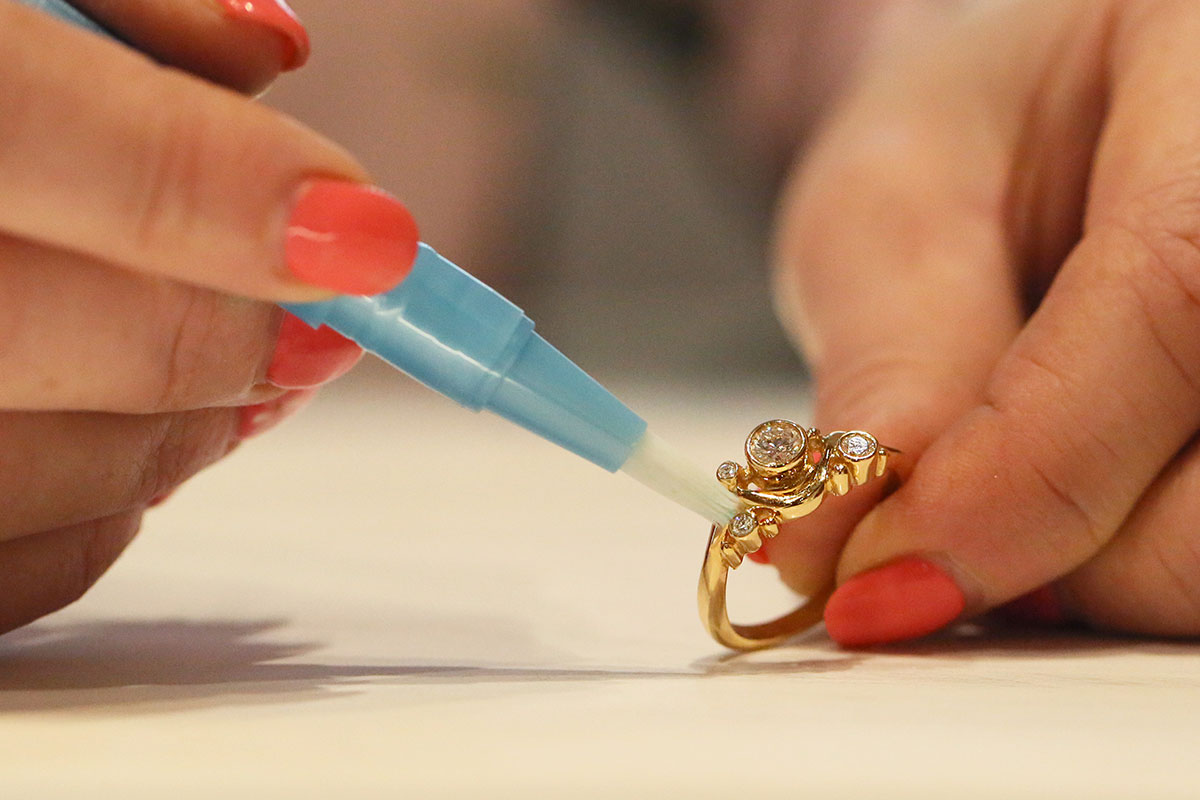
Bespoke ring with lab-grown diamond, Ian Mundie & Sons Fine Jewellery
How are lab-grown diamonds made?
Lab-grown diamonds are created in controlled factory environments designed to mimic the natural conditions that produce diamonds underground.
There are two main methods used to create lab diamonds:
CVD (Chemical Vapour Deposition)
This process grows diamonds using gases such as methane and hydrogen. Carbon atoms from the gases gradually build up and crystallise into diamond.
HPHT (High Pressure High Temperature)
This technique replicates the intense pressure and heat found deep within the Earth. Materials such as graphite are subjected to extreme conditions until they form a diamond crystal.
Both methods produce stones that are optically and chemically identical to natural diamonds.

Studio Collection 18ct gold oval-cut lab-grown diamond ring alongside Studio Collection 18ct gold round brilliant lab-grown diamond ring, both James Porter & Son
Are lab-grown diamonds ethical or sustainable?
One reason many couples consider lab-grown diamonds is the perception that they are a more environmentally friendly or ethical alternative to mined diamonds. Because the stones themselves are not extracted from the Earth, they can have less direct environmental impact on landscapes and ecosystems.
However, the reality can be more complex. Producing diamonds in laboratories requires significant amounts of energy, and some facilities rely on fossil fuels to power their manufacturing processes. While some producers now use renewable energy, this is not universal across the industry.
For this reason, jewellery experts recommend researching individual suppliers and asking questions about:
-
energy sources used in production
-
diamond certification
-
manufacturing transparency
Ultimately, the choice between lab-grown and natural diamonds comes down to personal priorities.
How much cheaper are lab-grown diamonds?
One of the biggest advantages of lab-grown diamonds is price. Because they can be produced in a controlled environment rather than mined, supply is more predictable and costs are lower.
This means couples can often afford:
-
a larger carat weight
-
a higher colour grade
-
a better clarity
within the same budget.
In some cases, a natural diamond can cost several times more than a lab-grown diamond with the same specifications.
For couples prioritising appearance and value, lab diamonds can help them achieve the look they want while keeping engagement ring costs manageable.

Studio Collection platinum pear-cut lab-grown diamond ring alongside Studio Collection platinum lab-grown diamond wedding ring by James Porter & Son
Do lab-grown diamonds hold their value?
When it comes to resale value, natural diamonds generally perform better.
Because mined diamonds are rarer and have an established secondary market, they often retain value more effectively over time.
Lab-grown diamonds are typically more affordable initially but have lower resale value.
For many couples, this is not a concern – engagement and wedding rings are rarely purchased with resale in mind. Instead, the focus is on personal meaning and design.
Are antique diamonds a sustainable alternative?
For couples looking for a sustainable option without choosing a lab-grown stone, antique diamonds can be another route.
Often referred to as old-cut or candlelight diamonds, these stones were hand-cut in earlier centuries and have a softer sparkle that performs beautifully in low lighting.
Because they already exist, choosing antique jewellery can be considered a low-impact option, while also offering something truly unique.

Platinum and 1.20ct lab-grown diamond wedding ring, Logan the Jewellers
Buying a diamond engagement ring: expert advice
Whether choosing a lab-grown or natural diamond, experts recommend taking time to research and view stones in person where possible.
Helpful tips include:
-
Always buy from a reputable jeweller
-
Ask to see the diamond certification
-
View the loose stone before it is set, if possible
-
Compare stones in real lighting rather than relying solely on specifications
FAQs about lab-grown diamonds
Yes. Lab-grown diamonds are made from crystallised carbon and are chemically identical to natural diamonds.
Specialist equipment is required to determine the origin of a diamond, as they look identical to the naked eye.
Yes. Lab-grown diamonds are typically significantly less expensive than mined diamonds with the same specifications.
They can have lower environmental impact than mined diamonds, but their sustainability depends on how they are produced and the energy sources used.
The best choice depends on your priorities – budget, sustainability considerations, resale value and personal preference.