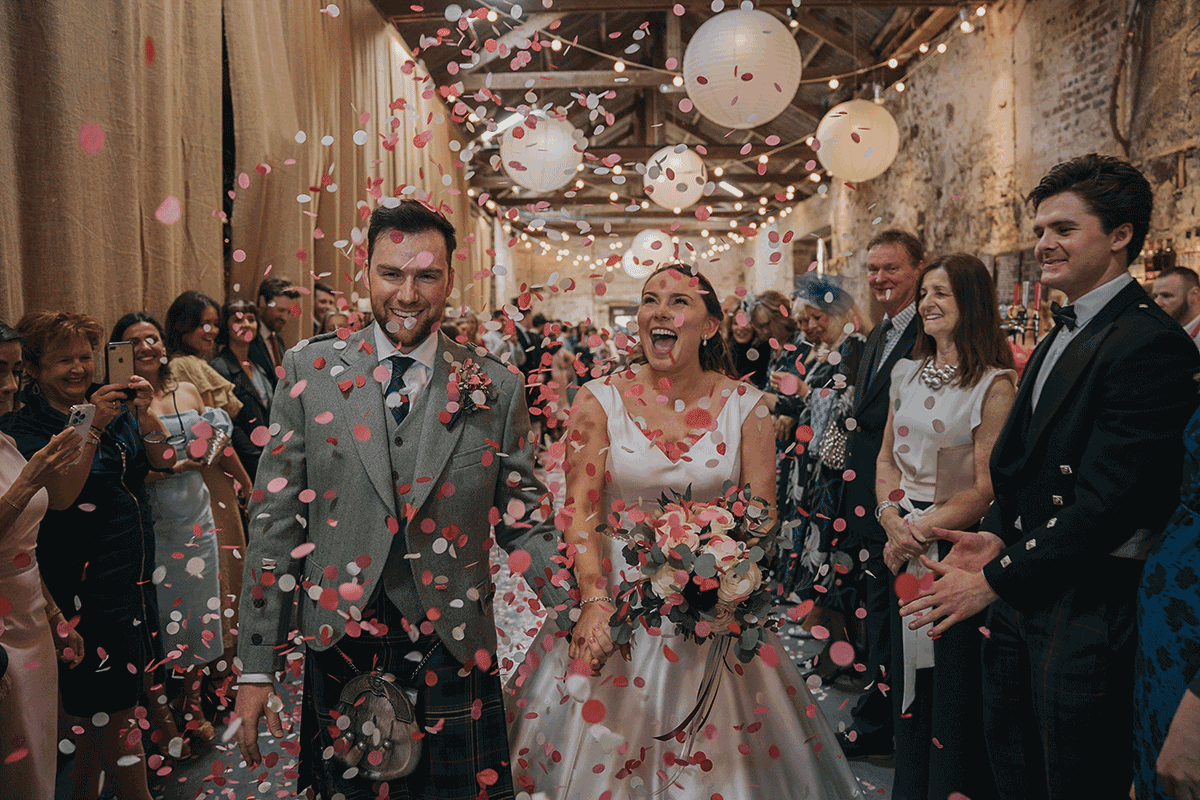
Not sure which wedding traditions you’re expected to follow in Scotland? From vows and speeches to timelines and cakes, here’s how modern couples are reshaping classic customs

(Photo: Jo + Liam Photography)
There was a time when weddings followed a fairly familiar script: spend the night apart, have dad walk the bride down the aisle, exchange rings, cut a tiered cake and follow a very particular order of speeches, dinner and dancing.
Thankfully, your wedding doesn’t have to follow anyone else’s rulebook.
Some wedding traditions are lovely precisely because generations of couples have done them before you, while others might feel outdated, impractical or simply nothing like you. Increasingly, the most memorable celebrations sit somewhere in the middle – keeping the bits that mean something, ditching the ones that don’t and giving the rest a very personal update.
Planning a wedding in Scotland and wondering what you actually have to do? From first looks and alternative wedding rings to bridesmaids in white and giant pavlovas, here are 15 modern wedding traditions you can keep, skip or completely reinvent.
Do you have to follow wedding traditions?
No. Most wedding traditions are customs rather than requirements, so you can keep, adapt or skip them according to what feels right for you.
There are, of course, legal requirements for getting married in Scotland, but they are much more limited than many couples assume. For a legal marriage ceremony, certain declarations must be made in front of the celebrant and two witnesses; most other parts of the ceremony can be shaped around you.
So, which traditions are worth keeping?
Everything you need to know to plan your wedding ceremony in Scotland
1. Sleeping separately the night before
The idea that you shouldn’t see your partner before the wedding goes back to a time when marriage looked very different to today.
These days, spending the night apart is mostly about creating a little anticipation – or having a sleepover with your wedding party – rather than warding off any supposed bad luck.
If you love the idea of waking up separately and having that big reveal later, then go for it. But if you know you'll sleep much better beside the person you normally share a bed with, then that's totally valid too.
There is also a middle ground: stay together but get ready separately in the morning, or spend the evening together before heading to different rooms. The tradition only needs to stay if it adds something to the experience.
2. Having a 'first look' before the wedding ceremony
What is a 'first look' in a wedding?
A first look is when a couple sees each other privately before their wedding ceremony, usually with their photographer there to capture the moment.
For anyone attached to the idea of locking eyes for the first time at the end of the aisle, this one might be an immediate no, but for other couples, a first look can make the timeline much easier. You can take some couple portraits before the ceremony, spend more of the drinks reception with your guests and – as one TTKS couple discovered – potentially calm a serious case of wedding-morning nerves.
Bride Elena was feeling particularly nervous before marrying Colton at Cambo Country House, and seeing her groom beforehand changed everything.
“I couldn’t pinpoint why I was so nervous – but once we did the first look and started taking photos together, I felt so much better,” recalls Elena. “The nerves were gone and I was excited!”
The couple had initially planned their first look because they wanted to maximise their time with guests after the ceremony, but the unexpected emotional benefit made Elena a “big, big fan” too.
So, is it bad luck to see your partner before the wedding? No. It’s simply another choice about how you want the day to feel.
See more details from Elena and Colton's autumn destination wedding here

(Photo: Jack Davolio Photography)
3. Choosing who walks you down the aisle
Who can walk you down the aisle?
Traditionally, the bride’s father escorted her down the aisle before “giving her away”. Plenty of fathers and daughters still treasure that walk together, but thankfully the idea behind it has evolved.
Nowadays, you can walk down the aisle with whoever you want:
- your mum or dad
- both parents
- a sibling
- a grandparent
- your children
- a close friend
- members of your wedding party
- your partner
- nobody at all – you can walk by yourself!
You could even do what Alexandria and Kenneth did at their wedding at The Exchange in Glasgow. Alexandria had planned to make the walk alone, but when she reached the halfway point, Kenneth came towards her and they completed it together.
“Ahead of the day he’d casually said, ‘I’m going to come and get you.’ I didn’t think he’d actually do it,” Alexandria says. “I broke down in tears – it was my favourite moment.”
Meeting in the middle feels like a pretty lovely metaphor for marriage, if you ask us.
See more from Alexandria and Kenneth's wedding day here

(Photo: Jennifer Glen Photography)

(Photo: Jennifer Glen Photography)

(Photo: Jennifer Glen Photography)
4. Exchanging wedding rings – or choosing something else
Do you have to exchange wedding rings to get married in Scotland?
No, exchanging rings is not one of the legal requirements for getting married in Scotland. A legal marriage does require particular declarations, a properly authorised registrar or celebrant and two witnesses, but rings themselves are a symbolic ritual.
That means there is no reason to buy a wedding ring simply because you think you are supposed to.
You could choose:
- a watch
- another piece of jewellery
- a tattoo
- an engraved keepsake
- a family heirloom
- nothing at all
Hayley Logan, co-owner of Ayr’s Logan the Jewellers, has noticed one alternative becoming particularly popular.
“We’re seeing an increase in customers opting for luxury watches over a wedding ring,” says Hayley Logan, co-owner of Ayr’s Logan the Jewellers. “With proper care, a good quality watch can be worn for decades and passed down to future generations. It’s often possible to engrave the back with a special message to mark the day, too.”
Of course, there’s nothing remotely wrong with exchanging rings either. The point is to choose something you genuinely want to wear or keep long after the wedding.
5. Letting your bridesmaids or wedding party wear white
Can bridesmaids wear white to a wedding?
Normally, turning up to someone else’s wedding in head-to-toe white without being asked is still a fairly risky move. But if the couple has deliberately chosen white, ivory, cream or champagne for the wedding party? Absolutely.
Using pale tonal shades across bridesmaids or the wider wedding party can create a really sleek, cohesive look while still allowing the person getting married to stand out through the cut, fabric or detail of their outfit.
Bride Jodi, for example, wore a beautifully bridal gown from Kudos Bridal Dunfermline alongside bridesmaids dressed in champagne tones – resulting in a soft, tonal look rather than any confusion over who was getting married.

(Photo: Lynsey Melville Photography)
6. Tossing the bouquet
The bouquet toss might be instantly recognisable, but it's certainly not compulsory.
There are plenty of reasons you might want to hold onto your flowers instead. Perhaps you have plans to have them professionally preserved, turn them into artwork or simply keep enjoying them for as long as possible after the wedding.
Want the photo without sacrificing your carefully chosen bouquet? Ask your florist to make a small tossing bouquet.

(Photo: Catching the Moments)
7. Choosing an alternative bridal bouquet
What can you carry instead of a traditional wedding bouquet?
Even keeping the idea of carrying flowers doesn’t mean you need to choose a conventional round or cascading bouquet.
Modern alternatives could include:
- a single statement flower
- a floral hoop
- a small posy
- an armful of long-stemmed flowers
- dried flowers
- foliage
- a flower basket
- a sculptural arrangement
- no bouquet at all
For bride Collette, florist Nicola Cameron of Glasgow’s Olive Flowers created something much more unexpected.
“Inspired by her vision of freely cascading calla lily stems, we created a bespoke floral hoop bouquet, comfortable to hold, beautifully sculptural, and designed to make an unforgettable statement.”
It still performs the role of a bridal bouquet, but feels completely personal to the outfit and overall wedding aesthetic.
And if you would rather have both hands free? There's no rule saying you need to carry anything.

(Photo: Sarah Hendrie Creative)
8. Cutting a traditional wedding cake
Do you actually need a wedding cake?
Nope! A tiered sponge remains one of the most recognisable wedding traditions, and if cutting into a beautifully decorated cake is one of the moments you’ve been looking forward to, keep it. If you're not mad about it, however, your dessert table has a lot more options these days.
Wedding cake alternatives could include:
- a giant pavlova
- croquembouche
- doughnuts
- brownies
- macarons
- tiramisu
- a cheesecake
- an ice-cream or gelato cart
- a dessert table
- a tower of cheese
And you don’t necessarily have to lose the ceremonial “cutting the cake” moment just because there isn’t actually a cake involved. Glasgow baker Karen Barker has become known for her enormous interactive pavlovas.
“The giant pavlova is my favourite show stopper. It creates an interactive experience as I do a live assembly on-site and guests can then serve themselves. The couple can even create a special moment of sprinkling more berries or dusting icing sugar on top.”

(Photo: Meggy Mac Photography)
9. Sitting on different sides during the ceremony
“Bride’s side” or “groom’s side” might once have been standard, but it can feel unnecessarily formal at a modern wedding – particularly if your guests already know one another. Open seating, on the other hand, allows everyone to sit wherever feels natural. It can also make far more sense for:
- same-sex weddings
- blended families
- uneven guest numbers
- small weddings
- couples with lots of mutual friends
You can simply allow guests to choose, or make the intention clear with a sign. And if having particular relatives in particular seats will make life considerably easier, assigned seating is perfectly fine too – modernising a tradition doesn’t have to mean doing the opposite of it.
10. Inviting everyone you know
There's no magic number that makes a wedding feel like a “proper” wedding. For some couples, the dream is 200 people filling a ballroom. For others, the thought of being watched by 200 people while saying their vows is enough to bring them out in a cold sweat!
A smaller guest list might give you more time with everyone there, free up budget for other priorities or simply create the atmosphere you actually enjoy.
Likewise, don't feel pressured into a micro wedding simply because intimate celebrations are fashionable. If your ideal day involves every cousin, university friend and work pal you've ever made, invite them all!

(Photo:Allan Law Photography)
11. Following the traditional wedding speech line-up
Traditionally, wedding speeches were given by the father of the bride, groom and best man (you may have spotted something those three people traditionally had in common).
Thankfully, there is no reason for the microphone to remain a men-only zone! Brides, mums, bridesmaids, maids of honour, siblings, friends and mixed-gender wedding parties can all give speeches. You could have several short speeches throughout dinner, one joint speech as a couple or no speeches at all.
The strongest line-up is simply the people who actually have something to say – preferably without requiring guests to sit through 90 minutes before their dinner!
12. Putting every bridesmaid in the same dress
Matching bridesmaid dresses can look gorgeous, but finding one colour, neckline, fabric and silhouette that every member of a wedding party genuinely likes isn't always easy. Enter mismatched bridesmaid dresses.
There are lots of ways to make the look cohesive without making everyone identical:
- one colour in different styles
- several shades of the same colour
- one fabric across different silhouettes
- a defined colour palette
- completely individual outfits tied together with flowers or accessories
It gives each person more freedom to choose something they feel comfortable wearing while still creating a cohesive overall look.
However, if everyone genuinely loves exactly the same dress, matching looks will never go out of style.

(Photo: Sun and Beau)
13. Having a very formal wedding ceremony
There are certain things in a wedding ceremony that have to happen if you want your marriage to be legally binding, but that doesn't mean the entire thing has to be super formal. There's plenty of scope to make a Scottish wedding ceremony feel more like the two of you.
Depending on the type of ceremony and the person conducting it, you might include:
- your own vows
- personal readings
- music with a story behind it
- anecdotes about your relationship
- handfasting
- drinking from a quaich
- contributions from family or friends
- moments involving your children or pets
- plenty of humour
14. Following the traditional wedding-day timeline
Ceremony, photographs, drinks reception, dinner, speeches, first dance, evening buffet. Sound familiar? It's a tried-and-tested timeline because, well, it works, but it isn't the only way to organise a wedding.
Perhaps you'd rather have speeches during the drinks reception, cut the cake before dinner or have your first dance the minute you enter the room, or maybe you're planning a twilight wedding with a later ceremony and more emphasis on the evening party.
Rather than fitting everything around a generic wedding-day schedule, speak to your venue, photographer, caterer and other key suppliers and build the timeline around the parts of the day you care about most.
15. Leaving the dog at home
If your dog is essentially another member of the family, leaving them out of your wedding might not feel right!
Provided your venue allows pets and your animal will cope well with the setting, there are lots of ways to involve them.
They could:
- walk down the aisle
- act as ring bearer
- join you for photographs
- make an appearance at the drinks reception
- be there for part of the day before heading home with a sitter
The important thing is being realistic about your pet's temperament. A dog who loves strangers, attention and new places may have the time of their life, whereas one who finds busy rooms stressful might be much happier appearing in a pre-wedding photo or having a cocktail named after them instead.

(Photo: Dani Rose Photography)
So, which wedding traditions should you keep?
The short answer is: the ones you like.
You don't need to abandon every traditional element to make your wedding modern, nor should you include something simply because generations of couples have done it before you.
You might wear a classic white dress but walk down the aisle together, exchange traditional rings and then serve a metre-wide pavlova, or spend the night apart but meet for a first look before the ceremony – the choice really is yours!
A modern wedding isn't defined by how many traditions you break. It's one where the choices feel deliberate and personal to the two people actually getting married.
FAQs about modern wedding traditions in Scotland
No. Most familiar wedding traditions are customs rather than legal requirements. Keep the ones that mean something to you, adapt others and leave out anything that doesn't feel right.
No. The idea is a wedding superstition rather than a legal or practical rule. Stay together, spend the night apart or arrange a first look, depending on what will make you happiest and most comfortable.
Yes. Humanist and celebrant-led weddings are fully legal in Scotland and allow for bespoke vows, personalised readings and meaningful rituals. Religious and civil ceremonies may have specific wording requirements, but additional personal vows are usually allowed.
You can skip traditions including spending the night apart, exchanging rings, having a bouquet, tossing the bouquet, cutting a wedding cake, traditional speeches, matching bridesmaid dresses and being walked down the aisle.
The legal parts of your ceremony are a separate matter.
Popular modern alternatives include first looks, personalised aisle entrances, mismatched bridesmaid outfits, alternative wedding cakes, relaxed ceremony seating, individualised ceremonies and non-traditional wedding timelines.
A first look is a private moment when the couple sees each other before the wedding ceremony, usually with their photographer present. Some couples use it to calm nerves or take portraits before guests arrive.