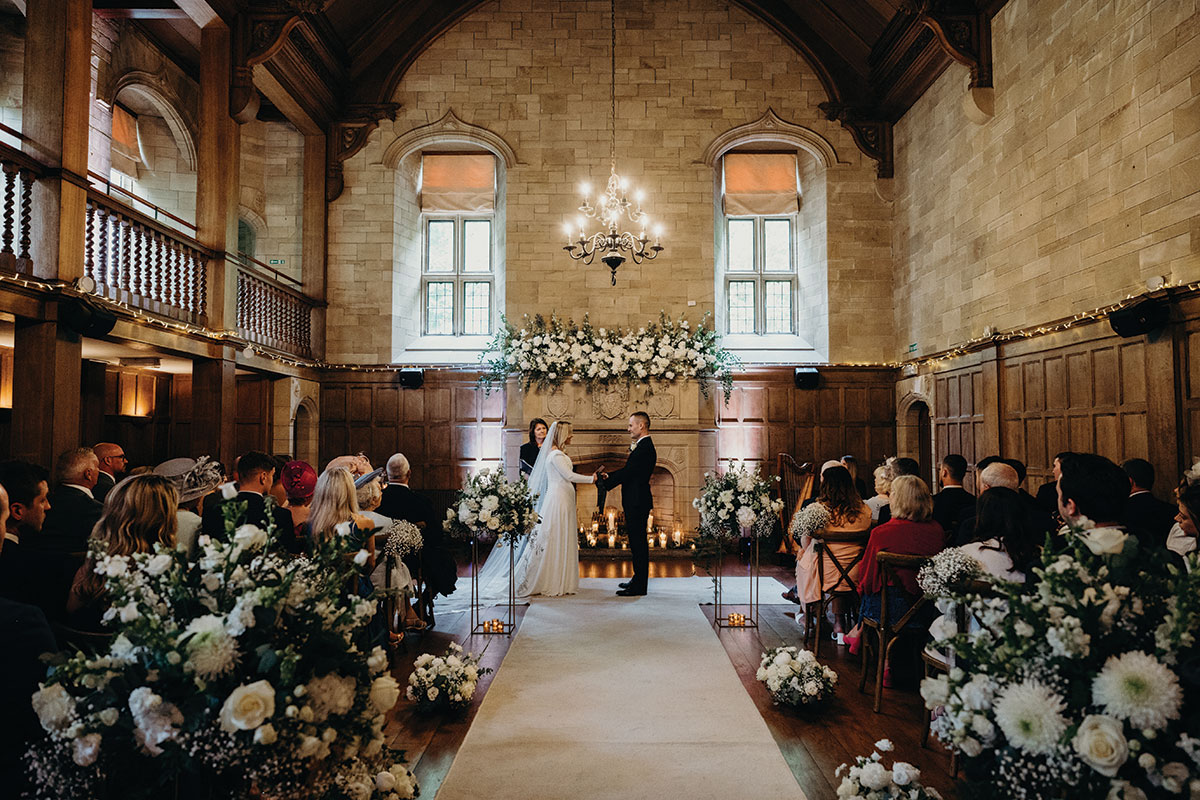
There is no single price tag for a Scottish wedding, but this guide shows what budgets from £10,000 to £40,000 could realistically cover – and the costs couples often forget

Photo: Shutterstock
How much does a wedding cost in Scotland? According to Bridebook’s 2026 UK Wedding Report, the average Scottish wedding now costs £22,987 – around 11% more than the UK-wide average of £20,604.
The figures are based on responses from approximately 7,000 married and engaged couples, and while they give couples a useful starting point, it certainly doesn’t mean you need to find £22,987 before you can begin planning!
Why? Because an intimate weekday ceremony in Edinburgh, a 70-person hotel wedding near Glasgow and a full exclusive-use weekend in the Highlands are all Scottish wedding options, but their final costs are likely to look completely different.
Guest numbers, venue, date, location and priorities will all affect how much you spend. Even two weddings held at the same venue could end up with very different bills once food, drinks, entertainment, flowers, outfits and optional upgrades are added.
So, rather than treating the national average as a target, this guide explores what different Scottish wedding budgets could realistically cover, where your money might go and how to create a plan that works for your day.
Jump to
- Average wedding cost in Scotland
- How much should you budget?
- What affects the cost of a wedding?
- What could a £10,000 wedding budget cover?
- What could a £20,000 wedding budget cover?
- What could a £30,000 wedding budget cover?
- What could a £40,000 wedding budget cover?
- How much does a Scottish wedding venue cost?
- How should you divide your wedding budget?
- Wedding costs couples often overlook
- How much should you keep as a contingency?
- How can you reduce wedding costs?
- How to create your own wedding budget
How much does the average wedding cost in Scotland?
The average wedding cost in Scotland is £22,987 in 2026, according to Bridebook.
That figure is best treated as context, rather than an amount couples are expected to match. Plenty of Scottish weddings cost considerably less, while exclusive-use castles, large guest lists and multi-day celebrations can take the total much higher.
How much should you budget for a wedding in Scotland?
A realistic Scottish wedding budget could be anything from under £10,000 for a small, carefully planned celebration to £40,000 or more for a larger exclusive-use wedding with accommodation, premium food and drink, extensive styling and several suppliers.
That’s an enormous range, so we recommend starting with three questions:
-
How many people do you want to invite?
-
Which three parts of the wedding matter most to you?
-
What can you comfortably afford?
Your answers to that will be far more useful than an average, because every couple’s vision is different. A couple who care most about food, photography, and live music might spend more in those areas while keeping everything else simple. Another might prioritise a beautiful venue and guest accommodation but choose minimal flowers and opt for digital stationery.
There is no perfect split. The aim is to spend intentionally, rather than squeezing in every wedding tradition, trend and social-media “must-have” simply because it exists.

From intimate city ceremonies to large hotel celebrations, the cost of a wedding in Scotland can vary enormously depending on the venue, guest numbers and suppliers chosen (Photo: Gemma Purdon Photography)
What affects the cost of a wedding in Scotland?
Your guest numbers
Guest count is often the biggest influence on the final total because it affects far more than just how many mouths you have to feed. More guests can mean additional:
-
food and drinks
-
tables, chairs and linen
-
stationery
-
transport
-
favours
-
evening food
-
accommodation
-
staff
-
centrepieces and table décor
Cutting the guest list is not always easy, but it can have a much bigger financial impact than saving a few pounds on individual details here and there.
Your wedding venue
While some Scottish wedding venues charge a separate hire fee, others offer packages that include the ceremony space, meal, drinks, evening buffet, staff and entertainment.
A package that looks more expensive initially could offer better value if it includes almost everything you need. Equally, a tempting low hire fee can rise quickly once catering, furniture, staffing, lighting and bar arrangements are added.
Before comparing Scottish wedding venues, check:
-
what's included in the quoted price
-
how many guests the package covers
-
the price for additional guests
-
whether VAT is included
-
whether there’s a minimum spend
-
whether ceremony fees are separate
-
whether accommodation is compulsory
-
whether you must use approved suppliers
The most useful question is not simply “How much is the venue?” but “What would our complete wedding at this venue cost?”

A blank-canvas barn wedding can offer plenty of creative freedom, but couples may need to budget separately for furniture, catering, lighting, flowers, staffing and venue styling (Photo: Patrick Phillips)
Your wedding date and day of the week
Peak-season Saturdays are typically the most sought-after dates, while midweek, Sunday and winter weddings often offer lower price points.
Don't worry, this doesn’t mean you need to get married on a Tuesday in January just to save money. A Friday, Sunday or off-peak Saturday could still give you the celebration you want while freeing up more of the budget for food, photography, entertainment or a honeymoon.
Where in Scotland you get married
Prices can vary across Scotland, but location also affects travel and accommodation.
A remote Highland venue might provide a spectacular setting but require transport, supplier travel fees and overnight stays. A city-centre wedding may reduce transport requirements but come with higher accommodation or parking costs.
The trick here is to think about the complete experience, not just the venue’s postcode.
The type of wedding you want
A relaxed restaurant wedding, hotel package, dry-hire barn and exclusive-use castle all involve different cost structures.
Blank-canvas venues can offer more freedom, but you may need to arrange catering, furniture, lighting, staff, bar facilities and styling separately.
All-inclusive packages, on the other hand, can make budgeting easier, although you may have less flexibility over suppliers, what is included and what you actually want to spend on.
Neither approach is automatically cheaper; the best value depends on how much you want to organise yourself and what your chosen package actually covers.
How we created these example wedding budgets: Tie the Knot Scotland used current publicly available prices from Scottish wedding venues and suppliers to create the scenarios below. Each table shows one possible way to spend the total rather than an average or fixed package. Prices were checked in July 2026, but couples should always request a personalised quote before booking.
What could a £10,000 wedding budget cover?
A budget of £10,000 could work particularly well for an intimate package wedding where several services are included under one price. Here’s an example of how a £10,000 wedding budget might be split:

What would couples need to compromise on?
This version relies heavily on the value of the venue package; there isn’t much spare room for several wedding-party outfits, extensive bespoke styling, an open bar, videography or a separate live band.
However, it still covers the main ingredients of a traditional wedding: a ceremony, meal, drinks, accommodation, photography, cake, flowers and outfits. That’s the real strength of a good package – fewer separate bookings and far fewer surprise additions.
What could a £20,000 wedding budget cover?
This example uses a Sunday-Thursday package for 100 daytime guests and an additional 20 evening guests. While many elements are covered within the package, including ceremony space, room hire, three-course meal, core drinks, canapés, evening buffet, décor, table stationery, two wedding cars, a honeymoon night and coordination, the budget allows for more extras and upgrades to be added.

What does this example show?
A £20,000 budget can stretch surprisingly far when the venue package already includes the meal, core drinks, buffet, décor, wedding-day stationery, cars and honeymoon accommodation.
The main trade-off is the date. This particular rate is more likely to apply to a Sunday–Thursday package. A Friday or Saturday, drinks upgrades or more guest accommodation would likely increase the total.
It’s also worth noticing how much of the budget is protected by choosing a package with clear inclusions. That’s considerably easier to manage than discovering three months before the wedding that chairs, linen or evening food cost extra.
What could a £30,000 wedding budget cover?
This example uses a twilight wedding package for 100 guests in Glasgow. It includes exclusive use of several spaces, ceremony-room hire, a post-ceremony drinks reception, canapés, a five-item buffet and a professional DJ. It is designed as a later-starting, party-led wedding rather than a conventional afternoon ceremony followed by a formal three-course wedding breakfast.

What does this £30,000 example show?
This is a city-centre, party-focused wedding rather than a conventional full-day hotel celebration.
Because the package already includes a DJ, a separate live band is optional. Couples could remove that line and move the money towards drinks, accommodation, florals or a larger contingency fund instead.
Likewise, because the package includes canapés and a buffet rather than a wedding breakfast, couples wanting a more substantial meal or extended drinks package would need to discuss upgrades directly with the venue.
What could a £40,000 wedding budget cover?
This example uses a whole-venue peak-season Saturday package for 140 daytime guests and an additional 60 evening guests. The package includes ceremony and reception spaces, a three-course meal, core drinks, canapés, an evening buffet, décor, stationery, two wedding cars, a honeymoon cabin and wedding coordination.

What does this £40,000 example show?
A larger budget can cover a premium Saturday, exclusive use, 140 daytime guests and a broad selection of suppliers – but it can still disappear quickly.
The biggest lesson here is that even larger packages don’t necessarily mean every room, bedroom, drink, styling detail or additional event is included. Always ask what’s included at the venue you’re considering.
Keep in mind: These examples use real published Scottish prices, but they are not quotes, national averages or recommendations for how every couple should spend their money. Availability, dates, VAT, travel, delivery, alterations and bespoke requirements can all change the final cost.
How much does a wedding venue cost in Scotland?
Scottish wedding venue pricing can be structured in several ways:
-
a venue-hire fee
-
a per-person package
-
a minimum food and drink spend
-
an all-inclusive package
-
exclusive-use hire
-
a multi-day or weekend rate
This can make comparing headline prices difficult. One venue might advertise a lower hire fee but require couples to arrange catering, drinks, furniture and staffing. Another may charge more initially but include nearly everything needed for the day.
To get a quote that’s as accurate as possible, give the venue your:
-
preferred date or season
-
estimated daytime and evening guest numbers
-
ceremony requirements
-
accommodation needs
-
preferred food and drink package
-
entertainment plans
Ask for a complete written breakdown so you can compare like with like.

Location can shape the overall wedding budget: a Highland venue such as Dornoch Station may have more included in its packages, but involve accommodation and supplier travel alongside it (Photo: Simon Hird Photography)
How should you divide a wedding budget?
There is no perfect formula, but the venue, food and drinks will often take the largest share because they cover the location and the experience of every guest.
A sensible starting point could be:
-
Venue, catering and drinks: around 40–55%
-
Photography and film: around 10–15%
-
Outfits and alterations: around 8–12%
-
Flowers and décor: around 5–10%
-
Entertainment: around 5–10%
-
Everything else: the remaining budget
Treat this as a planning exercise rather than a rule. A couple planning a restaurant wedding may spend more on food and less on décor, whereas someone holding a ceremony at home might spend less on venue hire but more on furniture, catering and practical infrastructure. Start with your three priorities and adjust the percentages around them.
Wedding costs that are easily overlooked
The big bookings usually get plenty of attention, but it’s the smaller additions – often confirmed much later – that can quietly push a budget off course.
Remember to consider:
-
VAT
-
venue ceremony fees
-
registrar or celebrant costs
-
marriage paperwork
-
supplier deposits
-
travel and accommodation fees
-
supplier meals
-
dress and suit alterations
-
beauty trials
-
accessories and underwear
-
corkage
-
bar minimum spends
-
cake-cutting fees
-
delivery and collection charges
-
furniture or linen upgrades
-
postage
-
signage stands and frames
-
evening food
-
children’s meals
-
taxis and guest transport
-
wedding insurance
-
breakfast the following morning
-
tips and thank-you gifts
-
last-minute purchases
A £20 charge may not seem like much in isolation, but twelve different £20 charges added are another story entirely!

Wedding flowers and venue styling are one of many things that can bring the cost of your wedding up (Photo: Rachael Friend Photography)
How much should you keep as a wedding contingency fund?
Try to keep approximately 5–10% of your total budget unallocated to cover price changes, forgotten items or decisions made later – it’s far less stressful to finish planning with money left over than to discover every pound has already been assigned six months before the wedding.
And should you reach the final weeks without needing it? Hello, honeymoon upgrade!
How can you reduce wedding costs?
We have a full dedicated guide on how to keep costs down for your wedding. Find it here
How can you create your own Scottish wedding budget?
We recommend starting with the maximum amount you can comfortably spend, then dividing it into four stages:
Step one: list the essentials
These might include:
-
ceremony and legal requirements
-
venue
-
food and drinks
-
outfits
-
photography
-
entertainment
Step two: choose your priorities
Each of you should separately choose the three things that matter most, then compare your lists.
Anything appearing on both lists deserves serious consideration. Anything neither of you selected may not need a large allocation.
Step three: get real quotes
Online guides can help you begin, but supplier quotes are what turn a rough budget into a realistic one.
Contact Scottish venues and suppliers with your actual date, location, guest numbers and requirements. A quote for somebody else’s wedding might act as a guide, but it won’t accurately tell you what yours will cost.
Step four: track every payment
Trust us, you’re going to want to create a spreadsheet. This should include:
-
total quoted price
-
deposit paid
-
payment deadlines
-
remaining balance
-
optional extras
-
cancellation terms
-
supplier contact details
Remember to track small purchases too. They’re still part of the wedding budget, even if they came from the supermarket rather than a wedding supplier!

From flowers and candles to linen, stationery and supplier extras, tracking every deposit, balance and payment deadline will help keep your Scottish wedding budget on course (photo: Karolina Kotkiewicz)
The bottom line
So, how much does a wedding cost in Scotland?
It costs whatever combination of venue, guest numbers, suppliers and experiences you choose – and that is exactly why one headline average rarely tells the full story.
A £10,000 wedding can be thoughtful, welcoming and full of personality. A £40,000 celebration can create an incredible multi-day experience. Neither is automatically better, more meaningful or more memorable.
Build the wedding you can afford, spend most on the things you genuinely care about and leave the rest of the “must-haves” behind. The right wedding budget is not the one that matches somebody else’s total, it’s the one that allows you to enjoy both the celebration and life afterwards.
Wedding cost FAQs
A realistic budget is one that reflects your guest numbers, chosen venue, date and priorities without putting your wider finances under unnecessary pressure.
Rather than beginning with someone else’s budget or a national average, request current quotes for your essential bookings and build the budget from those figures. Include a contingency of approximately 5–10% for unexpected costs.
A smaller Scottish wedding can cost considerably less than a large traditional celebration, but guest numbers are only one factor.
A small exclusive-use luxury wedding may still have a significant price tag, while a relaxed restaurant reception or weekday package could be more affordable.
Consider the venue, date, catering, supplier coverage and what is included alongside the number of guests.
There is no fixed cost for a 50-person wedding. The price will depend on the venue, menu, drinks package, date and number of suppliers booked.
A 50-guest wedding could potentially fit within a budget of around £10,000–£20,000 with careful planning, but premium venues, exclusive use, extensive styling or guest accommodation could increase the total.
The cost of a 100-person wedding can vary significantly, particularly because food, drinks and evening catering are usually charged per guest.
A larger hotel package may offer clear per-person pricing, while an exclusive-use venue could involve separate hire, catering and accommodation costs.
Ask venues for a full quote based on 100 daytime guests and your expected evening total, rather than trying to scale up a smaller advertised package yourself.
It can be. Some Scottish wedding venues offer lower hire fees or packages for midweek and off-peak dates.
However, check whether guests will require additional leave, travel or accommodation before deciding. The cheapest venue date is not necessarily the best overall option for your celebration.
There is no universally cheapest month, but venues may offer lower rates or special packages during quieter periods, particularly outside the main spring and summer wedding season.
Availability and pricing vary, so ask each venue which dates currently offer its best value rather than assuming every winter month costs less.
Begin with the venue and ceremony arrangements because these establish the date, location, capacity and often a significant portion of the cost.
Once those are confirmed, prioritise suppliers who can only attend one wedding each day, such as photographers, videographers, celebrants, bands and some hair and makeup artists.