From legal paperwork to location ideas, here’s how to plan an intimate, practical and personal elopement in Scotland
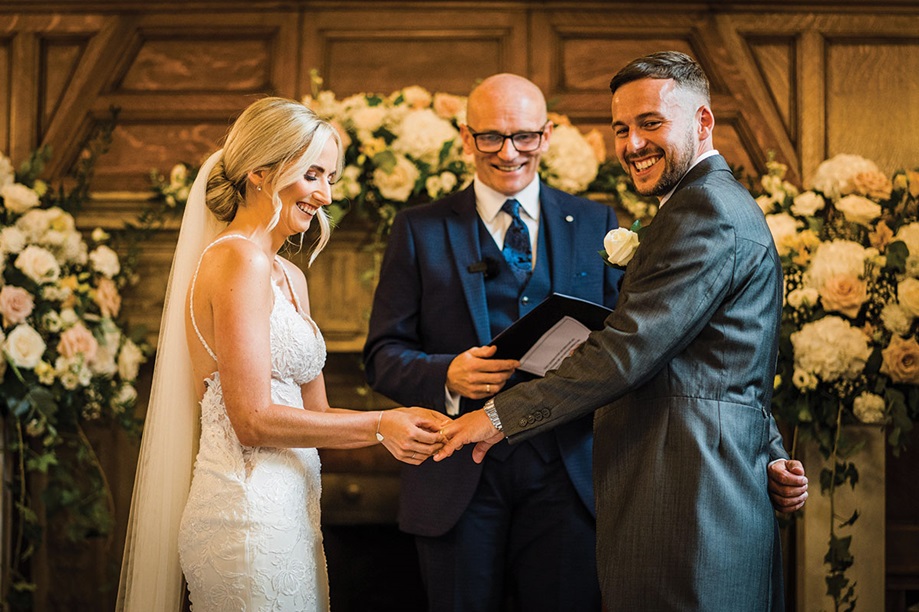
“From the freedom and beauty, to the people and passion, Scotland has it all when it comes to eloping,” says Rona Burstow of Humanist Society Scotland, who conducted the ceremony for this couple. (Photo: Seán Bell Photography)
Planning to elope in Scotland? Whether you’re picturing a Highland ceremony, a quiet lochside exchange of vows, a city-centre registry office wedding or a small celebration at a Scottish wedding venue, this guide explains how to elope in Scotland legally, practically and with fewer surprises along the way.
Eloping in Scotland no longer means secretly marrying without anyone knowing. For many couples, a Scottish elopement is simply a smaller, more personal way to get married, often with few or no guests, a meaningful location and a day shaped around what matters most to them.
So, how do you actually plan one? Here’s everything to know about legal paperwork, M10 forms, witnesses, locations, costs, weather, timelines and the expert suppliers who can help.
What does it mean to elope?
Traditionally, eloping meant running away secretly to get married. Today, it is usually less about secrecy and more about scale, intention and atmosphere.
A modern elopement can be a ceremony for just the two of you, a tiny wedding with a handful of guests, or a small celebration that strips away the pressure of a larger event. The main difference is that the day is usually more intimate, flexible and centred around the couple.
“There is no pressure with an elopement. It’s just about the two of you – and maybe the odd Highland cow passing by,” laughs Brian Baxter, a celebrant with Fuze Ceremonies.
“While there’s scope to do exactly what you want in a 'traditional’ wedding, eloping allows couples to focus solely on each other and the meaning behind the moment.”
Why elope in Scotland?
Scotland is one of the best places to elope because it offers dramatic scenery, flexible ceremony options and a huge variety of locations, from remote Highland landscapes to historic city buildings.
“We’ve got some of the most beautiful landscapes in the world – mountains, lochs, oceans, cliffs, forests, even cities – and you can be legally married pretty much anywhere,” explains Sarah Tonnar, who plans weddings through her business, Swoon Elopements.
“This means you can pick a spot that truly speaks to you.
“We’re also lucky to have some of the most talented vendors in the business who’ll be able to help you bring it all to life."
"You can make your vows by the side of a loch, at the top of a mountain, on a beautiful beach, in the shadow of a historic castle, in the middle of a forest or even in the grounds of a graveyard: every elopement is unique and memorable,” smiles Paul Browett, aka The Scottish Celebrant.
“We can’t always guarantee that an outdoor elopement will include sunshine, but if you’ve picked the right spot it will have brilliantly breathtaking views. Eloping also feels extremely romantic and intimate, which can result in stunning photos and everlasting memories.”
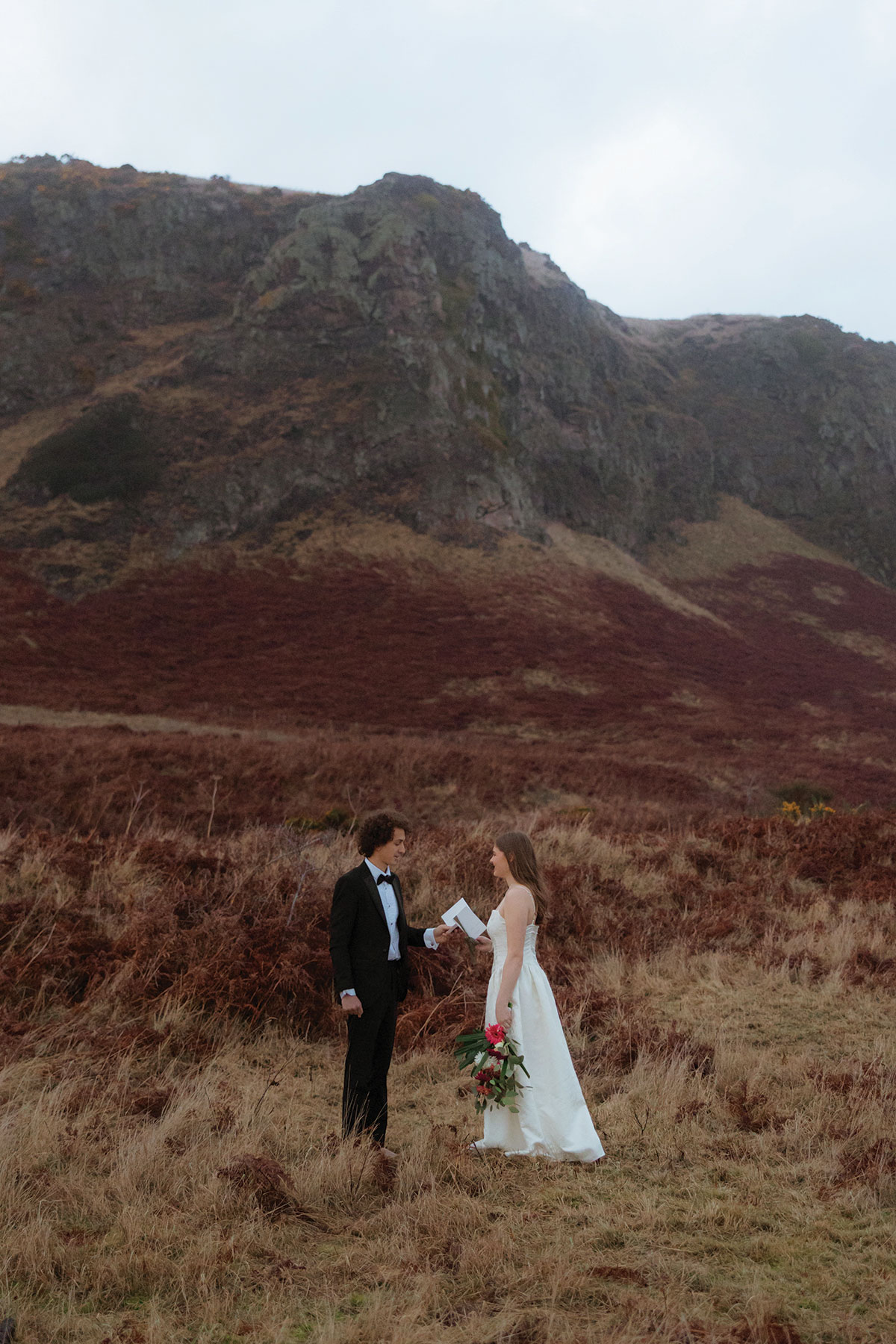
Scottish elopements are becoming more and more popular. (Photo: Sam McGregor)
Can you have guests at an elopement?
Yes. Although some couples choose to elope with only the legal minimum number of people, there is no rule saying you cannot invite guests.
“While some ceremonies do include only the couple, plus me and two witnesses, many elopements could also be called micro-weddings,” says Beverley Bryant of Independent Humanist Ceremonies. “Often a few family members or furry friends will tag along.”
That means your Scottish elopement could include your parents, siblings, closest friends, children, dog, photographer, planner, piper or whoever feels right.
The key is keeping the day manageable. If your ceremony involves a hike, a remote location, uneven ground or limited parking, think carefully about who can comfortably get there.
How to legally get married in Scotland
Now for the most important part: the legalities. “For a marriage to be legal in Scotland, both you and your partner must be at least 16, and you need two witnesses,” Sarah says.
“These could be your photographer and wedding planner. Then, all that’s required is a registrar or registered celebrant to make it official.”
Paul adds: “The couple must notify the registry office of the area where the elopement is taking place, by submitting Marriage Notice (M10) forms, along with supporting documents, anywhere between 90 to 29 days before the wedding.”
What is the M10 form and how much does it cost?
The M10 form is the marriage notice form you need to complete before getting married in Scotland.
Each person getting married must fill in their own M10 form. You will submit these to the registrar in the district where your elopement will take place, along with supporting documents.
Your M10 forms ask for details including your full name, date of birth, address, parents’ names, whether you have been married before, the date of the proposed marriage and the place where the ceremony will happen.
It also asks for the place and date of the proposed marriage, so you can’t decide on the day itself to tie the knot on a beach if you’d previously specified the top of Ben Nevis!
You’ll need to gather a few supporting documents to send with the completed M10s, and those documents must be originals, not photocopies – things like a birth certificate, photo ID (for example, a passport or driving licence), and a recent bill or statement that shows your name and address.
At its most basic, the cost for eloping – just like for any marriage in Scotland – is £100 (£45 for your M10, £45 for your partner’s, plus £10 for entry to the marriage register).

"Make sure your celebrant is licensed, or your marriage won't be legal" advises Craig Flowers (Photo: Lisa Griffin)
See how to fill in the marriage M10 form for getting married in Scotland
Eloping to Scotland from overseas
It’s not just locals who see the beauty of eloping in Scotland; many couples from overseas are drawn here too.
“If you’re coming from outside the UK to get married here, you may require additional visa documents to do so,” says Paul. “The registry office will then provide a marriage schedule which will be signed on the day of the wedding by both of you, an officiant and two witnesses.”
Brian at Fuze Ceremonies further explains how couples from abroad can make things even simpler.
“There are no residence requirements when eloping to Scotland, so anyone can get married here,” says the celebrant.
“When eloping, you can choose either a legal or symbolic ceremony. A symbolic wedding is the simplest option as it does not include the legal aspects of registering for a marriage in a foreign country.”
Can you get married anywhere in Scotland?
Unlike many other countries, Scotland gives couples a lot of freedom when it comes to ceremony locations. Beaches, forests, mountains, lochs, castles, gardens, private homes, wedding venues and city spaces can all be options.
The location still needs to be properly planned, though.
“We are spoilt for choice with our scenery and venues, but always remember that you need permission from the venue or land-owner ahead of time in order for a ceremony to be conducted there,” clarifies Craig Flowers of Independent Humanist Ceremonies.
The exact location should also be agreed before you submit your legal paperwork, as it needs to be stated on your marriage schedule.
“Scotland is a wonderful choice,” adds Craig. “A legal ceremony can be conducted anywhere in the country by a legally authorised celebrant, providing the location is safe, appropriate and you have the permission of the land or property owner.”

Celebrant Beverly Bryant conducting a remote, outdoor elopement (Photo: Tommy Hamilton)
Where to elope in Scotland
There’s no doubt about it: Scotland’s landscapes will provide a striking backdrop for your day, so you’ll hardly be struggling for a location.
A few of the most popular locations for eloping in Scotland are in the highlands, specifically Glencoe, or at Gretna Green which has been a magnet for runaway lovers since 1754!
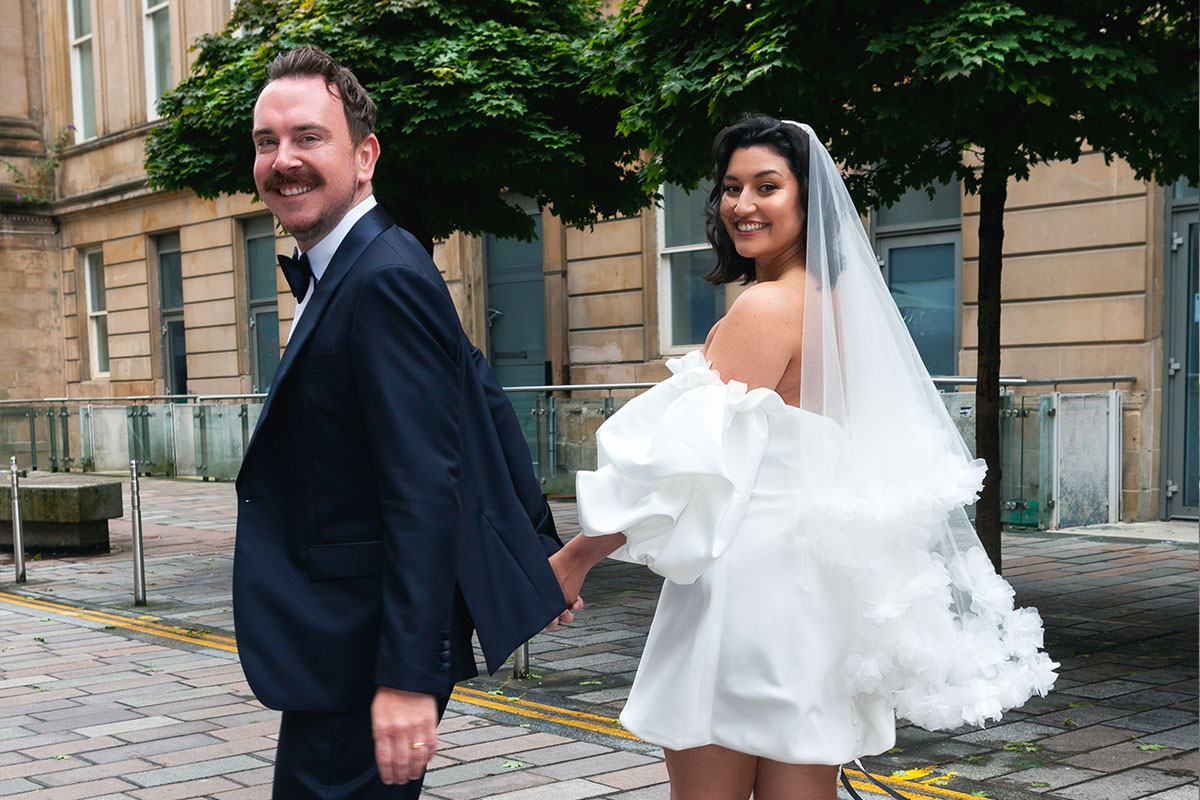
Additionally, there has been in a rise in city centre elopements – in fact, Scottish influencer Jilly Cross (aka Jilly Isabella) tied the knot with former Rangers footballer Andy Halliday in July 2024 at Glasgow City Chambers.
The couple shared the happy news on Instagram with a series of candid snaps of them walking around the city centre and also in the back of a taxi.
Check out our full guide on how to have a chic and intimate registry office wedding
Eloping to Gretna Green
While the 1754 Marriage Act in England forbade couples under 21 from marrying without parental consent, Scotland’s age restriction was 16. This caused many young couples to look for somewhere they could conveniently marry just north of the border so as not to waste any time.
Today, couples still journey to Gretna Green from across the world, drawn by the romance of tradition and the promise of something deeply personal.
All you need to know about Gretna Green weddings, ceremonies and elopements
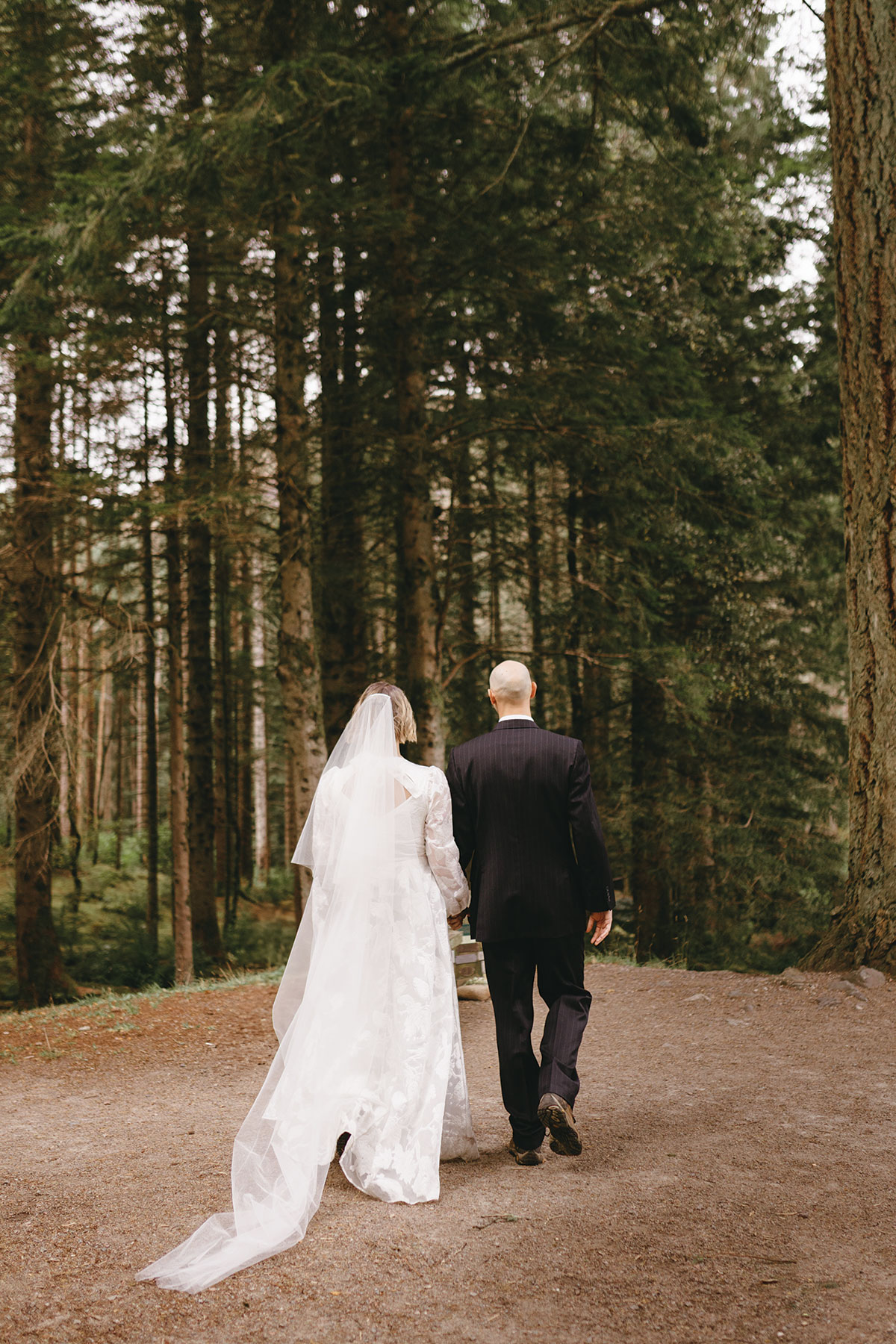
“Eloping is all about keeping it personal,” explains Sarah Tonnar from Swoon Elopements. (Photo: The Future Before)
How much does it cost to elope in Scotland?
With couples in the UK reportedly spending on average more than £20k on a wedding, according to Bridebook, it is little wonder that many of us are looking for more cost-effective approaches.
Paul has some insights into how eloping could be just the ticket: “Generally speaking, the cost of an elopement will be much less than a conventional wedding. Without the need for a large venue, decor and paying for lots of guests, it is clear that an elopement is simpler and less expensive.
“Surrounded by a small number of people – or just yourselves – out in the stunning Scottish scenery, you already have the most impressive aisle to walk down, and after having a beautifully intimate and personal ceremony, you can stroll off into the sunset.”
How to keep costs down for your wedding: from when to get married to decor ideas
Brian agrees that eloping not only gives couples who are travelling from abroad the freedom to choose their wedding day schedule, it allows them more control over their expenses and budget.
“Elopements can be as expensive or as affordable as you choose,” he believes. “Your only unavoidable expense will be the air fare to get to Scotland. Then, you can decide what to spend your budget on – to hire a kilt or buy a dress, for example, or pay for flowers, accommodation and a photographer.”
How to plan your Scottish elopement timeline
Elopements are often smaller than traditional weddings, but they still need a timeline.
This is especially true if you are marrying somewhere remote, planning photos in more than one location or relying on ferry times, daylight, weather windows or supplier travel.
As many elopements take place in fairly remote locations without a venue team or wedding coordinator on hand, the logistics are usually organised directly between the couple and their suppliers.
“The key is not to leave things to the last minute,” he adds. “Be prepared ahead of time and liaise with all your suppliers to ensure everyone is on the same page – especially if you’re unfamiliar with the area.” says Craig.

"I've led ceremonies at sunrise, sunset, and in the middle of the day – it's all down to when suits the particular wedding" says Paul Browett of The Scottish Celebrants (Photo: Danielle Stewart Photography)
What to do if it rains on your wedding day
Scotland does many things well, but one thing it truly excels at is giving us four seasons in one day. If you’re eloping somewhere outdoors, remember the weather is beyond your control.
“Our weather is known for being temperamental, and that can be a factor, depending on your plans,” says Brian.
“However, you just have to keep in mind that this is part of the charm of a Scottish outdoors wedding. You can get swirling mist, pouring rain and bright sunshine all in the space of a single hour, and that makes for beautiful photos and fun memories.”
Want unforgettable wedding images? Expert photographers tell us how
Emma Crowe, from weddings and events planning business White Heather Events, also encourages you to embrace the ever-changing weather.
“Some couples worry that it could spoil their day, but even cold and rainy days have their positives, especially for moody and atmospheric photographs – there’s beauty in every season here,” she smiles.
“Even when it’s really bad, there’s often a break in the clouds just around the corner. Elopements give you great flexibility to take advantage of the best part of the day, as you don’t need to stick to a plan or to exact timings as you would for lots of guests in a normal venue.”

While good weather is never guaranteed, Scottish landscapes look beautiful in all conditions (Photo: David Grant Simpson Photo)
Advice to make your elopement a success
Personalise it
“Content-wise, we approach every elopement ceremony in the same manner as a traditional one. We gauge a tone that’s right for each couple, and prepare a script in advance for consideration before fine-tuning it until it’s just right.” – Craig Flowers, Independent Humanist Ceremonies
Plan how you'll get there
“There are plenty of stunning remote locations to choose from, but some spots require hiking or driving to get there. If you’d rather not drive on your wedding day, speak with your planner or photographer about transportation.” – Paul Browett, The Scottish Celebrants
Discuss your plans with your suppliers
“You won’t necessarily need as many suppliers as you would with a typical wedding, but the ones you do book must be suitable for what you have in mind – a photographer and celebrant, for example, who are up for the adventure.” – Emma Crowe, White Heather Events
Think about access and safety
A beautiful location is only a good elopement location if everyone who needs to be there can reach it safely.
Before you commit, ask:
- Can the celebrant or registrar access the spot?
- Is the route safe in poor weather?
- Is there parking nearby?
- Will guests need to walk far?
- Is the ground suitable for your outfits and footwear?
- Is the location likely to be busy with tourists?
- Do you need permission from a landowner, venue, estate, council or organisation?
“Thankfully, many of Scotland’s scenic areas, such as Glencoe, are managed by the National Trust for Scotland, while other areas are overseen by local councils and it’s a simple case of completing a form for these – get in touch directly,” says Beverley Bryant.
She also suggests sparing a thought for your celebrant: “Be sure they’re aware if they have a hike ahead and give them an idea of how strenuous it may be too!”
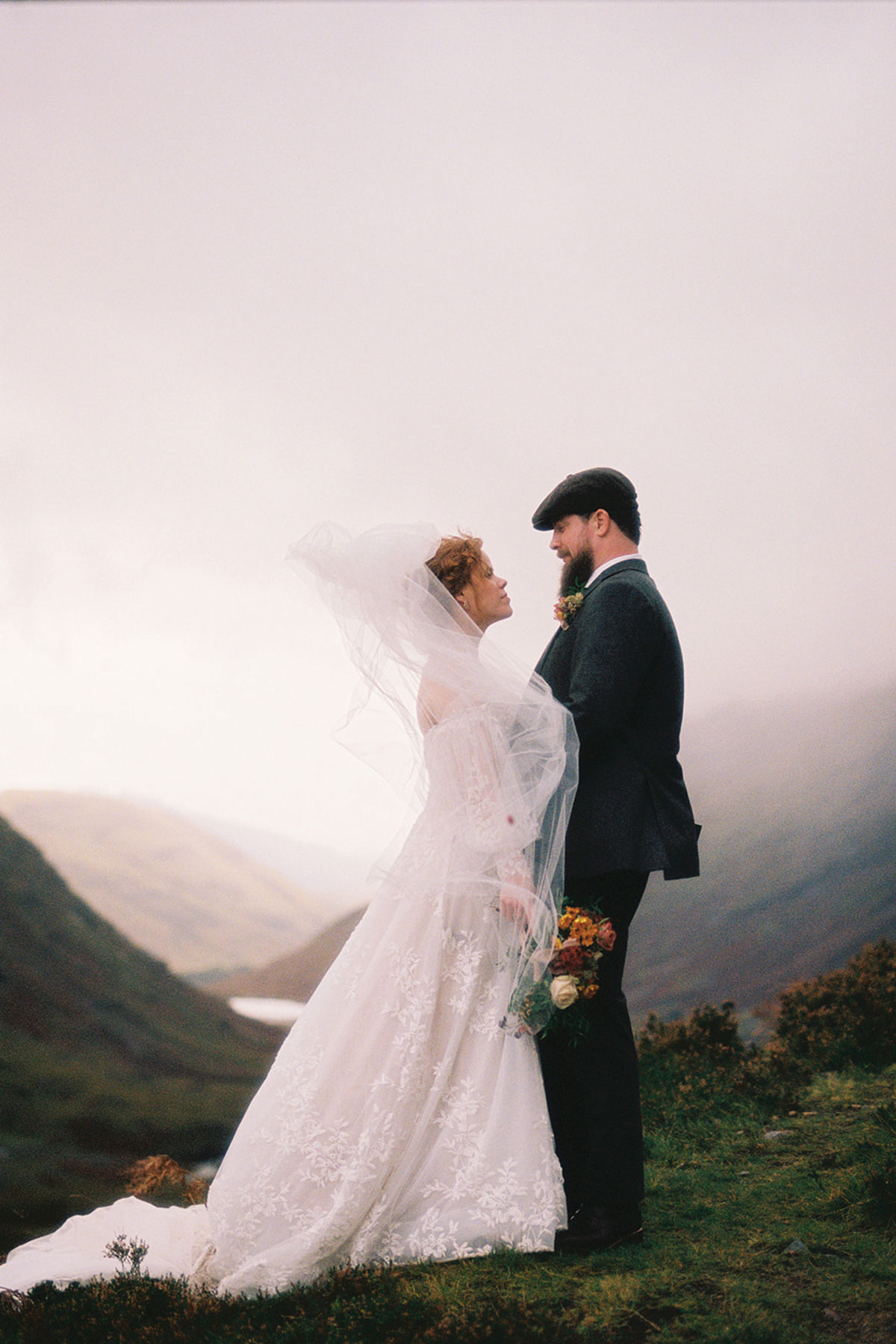
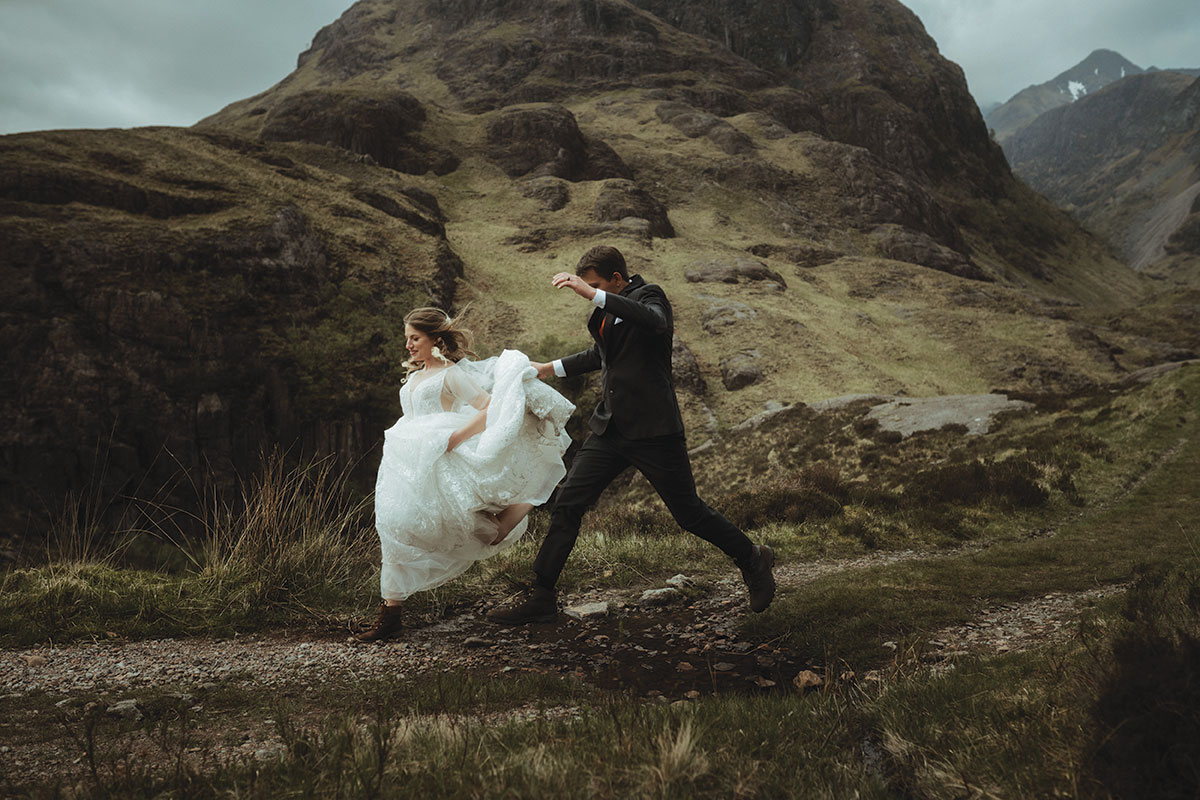
“When it comes to the weather, the best thing you can do is stay flexible and open- minded – like this couple here,” says wedding and elopement photographer, Loraine Ross. (Photo: Loraine Ross)
Final advice for planning a Scottish elopement
Eloping in Scotland can be simple, personal and unforgettable, but it is not something to leave entirely to chance.
The best elopements balance freedom with planning. Get the legal paperwork right, choose a location that is safe and meaningful, build a timeline that leaves room for the weather, and book suppliers who understand the practicalities of outdoor or small-scale weddings.
Do that, and your Scottish elopement can feel exactly as it should: personal, relaxed and completely centred around the two of you.