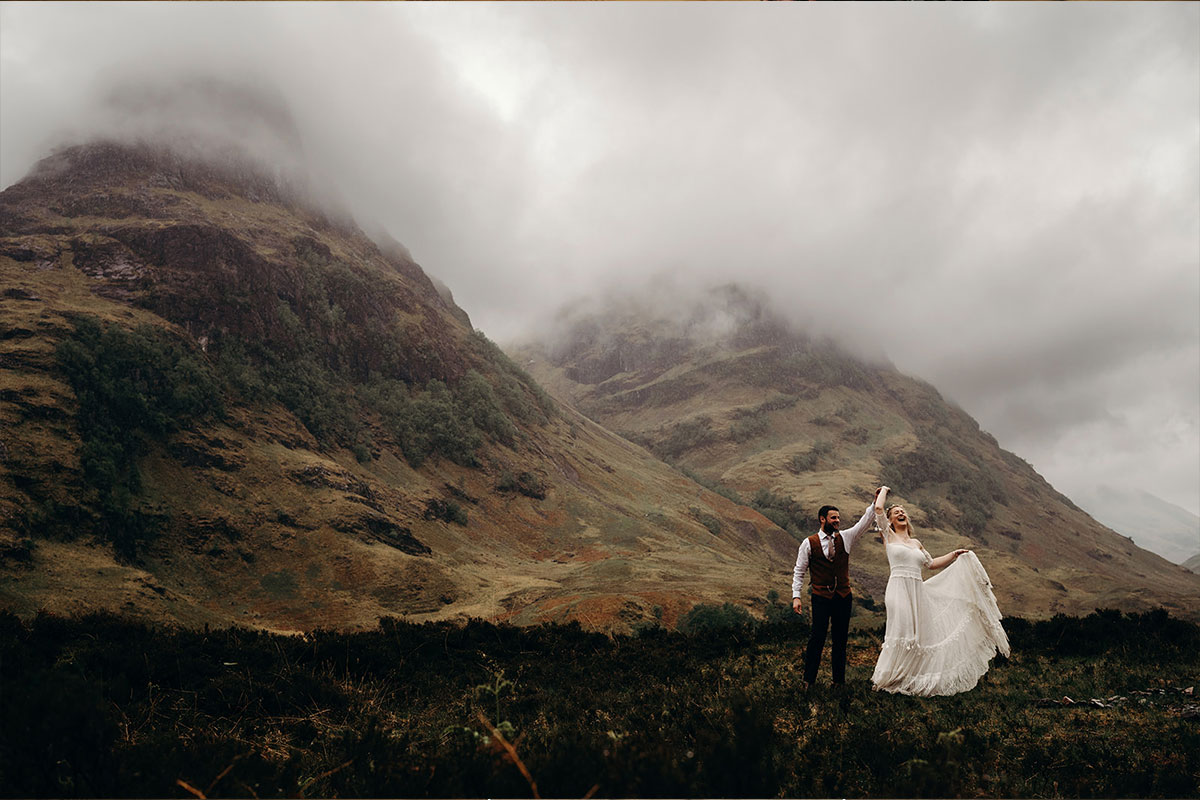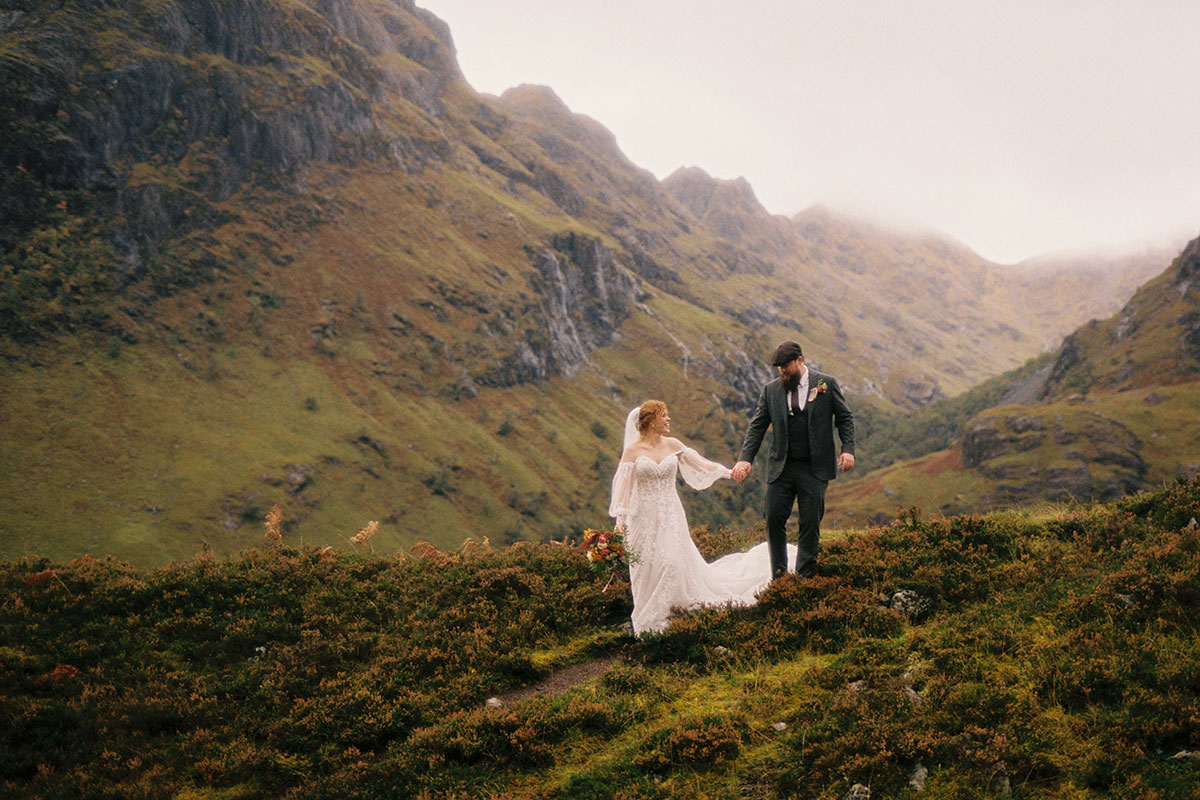
Dreaming of relaxed outdoor wedding photographs? Four photographers explain how to work with Scotland’s light, landscapes and changing weather to capture images that feel completely natural

(Photo: Gemma Purdon)
Scotland certainly isn’t short of spectacular wedding photo locations. There are dramatic Highland landscapes, sandy beaches, castle grounds, woodland paths and streets full of character in cities like Edinburgh and Glasgow.
The weather, however? Slightly less predictable.
The good news is that memorable outdoor wedding photography rarely depends on cloudless skies or spending hours posing away from your guests. It's usually the result of good planning, a little flexibility and trusting your photographer to recognise the right light and moment.
But don’t just take it from us – we spoke to four wedding photographers who share their advice for getting relaxed, natural outdoor couple portraits while still enjoying the celebration you spent so long planning.
1. Ask to see full wedding galleries in similar conditions
A photographer’s Instagram grid is a useful introduction to their visual style, but it will naturally only showcase a selection of favourite images. It might not reveal how they photograph a complete Scottish wedding through changing light, rain, dark interiors and unpredictable weather.
That's why Eva Sanders, one half of husband-and-wife photography team Craig and Eva Sanders, recommends asking to view several full wedding galleries before booking.
Where possible, look for weddings photographed at your chosen venue or at somewhere with similar surroundings. It is also helpful to request examples from the same season as your wedding.
“If you’re getting married in November, pictures of a June wedding won’t really help,” she explains. “The light, the colours and even the landscape can look completely different. The same applies to poor weather – it changes everything from the outdoor approach to how the inside of the venue looks and feels.”
A full gallery should take you beyond the standout portraits. Look at how the photographer captures the ceremony, group photographs, indoor spaces, evening reception and the quieter moments in between.
This will give you a more realistic impression of their work and help you decide whether you share the same idea of which moments matter most.
What should you look for in a full wedding gallery?
Pay attention to:
-
Consistency across the whole day
-
Photographs taken in both bright and low light
-
Indoor images as well as outdoor portraits
-
Natural reactions and candid moments
-
Family group photographs
-
Rainy or overcast conditions
-
Evening and dance-floor photography
-
How different skin tones and clothing colours are captured

(Photo: Craig and Eva Sanders)
2. Treat your couple portraits as an experience, not a task
Couple portraits can feel daunting when neither of you is particularly comfortable in front of a camera. It’s also easy to view the session as another item that must be completed before returning to the party.
Photographer Claire Fleck encourages couples to approach this part of the day differently.
“Relax into each other and enjoy your surroundings, when you look back on your photos, you’ll remember the moment and the atmosphere rather than the act of being photographed.”
Instead of worrying about where your hands should go or whether you’re standing correctly, focus on spending a little uninterrupted time together. Walk, talk, take in the surroundings and allow your photographer to give you simple prompts where needed.
This can be particularly valuable on a busy wedding day. A short portrait session may be one of the few opportunities you have to step away from the crowd and properly take in the fact that you just got married.
Choose a location that feels like you
A beautiful backdrop doesn’t need to be a dramatic mountain or remote loch. Claire believes quieter, more personal locations often work best.
That could be:
-
A cobbled Edinburgh street
-
A nearby beach
-
A woodland path
-
A private garden filled with seasonal flowers
Choose a setting that complements the wedding and feels natural to you, rather than selecting somewhere purely because it seems like an obvious photo opportunity.

(Photo: Claire Fleck)
3. Understand how natural light changes during a wedding day
Light plays a major role in the mood, colour and overall feel of outdoor wedding photographs.
Photographer Laura Tiliman often plans a brief portrait session around golden hour, the period shortly before sunset when the sun sits lower in the sky:
“I always aim to capture some couple portraits during golden hour, the low sun creates this beautiful soft glow, especially in natural settings.”
Golden-hour portraits can be particularly effective at countryside estates, coastal venues and locations with uninterrupted views. However, the precise timing varies according to the date, season, weather and where you are getting married in Scotland.
It’s worth asking your photographer when golden hour is expected to fall and whether that timing works with your meal, speeches and evening reception.
Is bright sunshine best for wedding photographs?
Bright sunshine sounds like perfect wedding weather, but strong overhead light can make portrait photography more challenging.
“Direct sunlight can create strong shadows and make you squint – we often see that in family group shots,” Laura explains.
Your photographer may suggest moving into open shade, standing beside a building or using an area sheltered by trees. These locations usually provide softer, more even light while allowing you to remain outdoors.

(Photo: Laura Tiliman)
4. Discuss your comfort level before the wedding
Outdoor wedding portraits can involve grass, gravel, damp ground, sand, woodland paths and the occasional muddy hem.
Before the wedding, think honestly about how comfortable you are with your outfit or shoes potentially picking up a little dirt.
“Consider your footwear and how you feel about your shoes or the hem of your outfit getting dirty,” Claire advises.
There is no correct answer. Some couples will happily walk across a wet field for a photograph, while others would prefer to remain on paved paths and sheltered terraces. Discussing this with your photographer in advance means they can recommend suitable locations without putting you in an uncomfortable position on the day.
Claire’s own philosophy is simple: “Clothes can be cleaned, but moments can’t be replaced.”
Practical ways to prepare for outdoor portraits
Consider bringing:
-
Comfortable shoes or boots
-
Heel protectors
-
An umbrella for between shots
-
A jacket, wrap or coat
-
Something to lift or protect a long train
-
A small towel for wet benches or surfaces
You may not need any of them, but having a few practical backups can make it easier to embrace a short break in the weather.

(Photo: Claire Fleck)
5. Plan your photography time carefully
Many couples worry that wedding portraits will keep them away from their guests for too long.
The easiest way to avoid this is to speak openly with your photographer before the wedding about how much time you want to dedicate to formal groups and couple photographs.
Eva and Craig Sanders encourage couples to keep the family list focused. “Eight to 10 family combos is usually more than enough.”
Try to prioritise the group photographs you know you’ll genuinely value. Long lists of slightly different combinations can take considerably more time than expected, especially when guests have wandered towards the bar or are mingling elsewhere.
Ask a member of the wedding party who knows the key people to help gather everyone. This allows the photographer to keep moving through the list efficiently.
Split your portrait session into shorter windows
Rather than disappearing for one long session, Eva and Craig prefer to divide portrait photography across the day.
Their approach is to:
-
Complete family groups shortly after the ceremony.
-
Take the couple away for a brief portrait session before dinner, when the grounds may be quieter.
-
Head outside again for a few minutes later if the evening light is particularly good.
This gives you a wider variety of photographs without making it feel as though you've missed a large part of your drinks reception.
It is also sensible to narrow down potential outdoor locations before the wedding, particularly if your Scottish venue sits within extensive grounds.
“Choose two or three spots you really love rather than having a huge list, then trust your photographer to work with the light on the day.”

(Photo: Craig and Eva Sanders)
6. Keep moving to create more natural wedding photographs
You don’t need to arrive at your portrait session already knowing how to pose.
Photographer Gemma Purdon favours gentle prompts and natural interaction over positioning couples rigidly in front of the camera. Walking together can help you relax, give your hands something natural to do and introduce movement into the photographs.
“I love city streets with a bit of movement and energy,” she says.
Busy streets, passing traffic and changing backgrounds can give urban wedding photography a lively, spontaneous feel. Quieter venues can create movement through walking, turning towards one another or allowing the wind to catch clothing and accessories.
“Fabrics with movement – dresses or veils that catch the breeze as you walk – can really bring the pictures to life.”
The aim is not to perform for the camera. Your photographer may ask you to walk, talk, look at one another or move through the setting, then capture what happens naturally.
What happens if it rains on your wedding day?
The uncertainty of Scottish weather can cause plenty of pre-wedding anxiety, particularly when you’ve chosen a venue for its gardens, grounds or surrounding landscape.
But rain doesn’t necessarily mean all your outdoor wedding photographs need to be abandoned.
An experienced photographer will monitor the forecast, look for sheltered locations and make use of short breaks in the weather. A dramatic sky, wet cobbles or softly falling rain may even give your photographs more atmosphere.
Eva offers a reassuring reminder: you do not need a full afternoon of perfect conditions.
“We’ve only not managed to get outside at all for one wedding that I can remember – an actual snowstorm – but on all other occasions just one small window will do.”
Ten minutes may be enough to capture a varied set of outdoor couple portraits before you head back inside.

(Photo: Gemma Purdon)
How to prepare for your outdoor wedding photographs
Before the day, speak to your photographer about:
-
The photographs that matter most to you
-
Your preferred portrait locations
-
When the best natural light is expected
-
Wet-weather alternatives
-
Accessibility and uneven ground
-
How long you want to spend away from guests
-
Your family group list
-
Whether you are comfortable getting your outfit slightly dirty
Planning these details in advance means you can make decisions calmly rather than trying to work everything out during the drinks reception.
Looking for a wedding photographer? Check out our directory to see Scotland's best
Outdoor wedding photography FAQs
How long should couple portraits take at a wedding?
There is no fixed rule, but couple portraits do not need to take up a large part of the day. A photographer may suggest one session of around 20–30 minutes or several shorter windows that work around the light and your schedule.
Discuss how much time you are comfortable spending away from guests before finalising your wedding photography timeline.
What is golden hour in wedding photography?
Golden hour is the period shortly before sunset when the sun is lower and the light often appears warmer and softer.
Its timing changes according to your wedding date and location. In Scotland, summer golden hour may fall quite late in the evening, while winter sunsets arrive much earlier.
Are cloudy days good for wedding photography?
Yes. Cloud cover diffuses sunlight, which can produce soft and even light without harsh shadows or squinting.
Photographers can create beautiful outdoor wedding portraits in bright, overcast, misty and lightly rainy conditions.
What should we do if we feel awkward in photographs?
Tell your photographer before the wedding. They can use movement, conversation and simple prompts rather than relying on formal poses.
An engagement or pre-wedding shoot may also help you become more comfortable with the photographer’s approach.
Should we create a wedding photo shot list?
A short family-group list is useful, as is telling your photographer about important people, details or family circumstances.
Avoid creating an enormous list of individual poses copied from social media. The light, surroundings and dynamics of your wedding will be unique, so leave room for your photographer to work creatively.
How do we choose the right Scottish wedding photographer?
Look beyond a photographer’s highlights and ask to view complete galleries from weddings with similar venues, seasons and lighting conditions.
You should also consider their editing style, approach to posing, personality, experience with Scottish weather and how comfortable you feel communicating with them.
The key to relaxed outdoor wedding photographs
The best outdoor wedding photographs are not necessarily created by travelling to the most dramatic location or waiting all day for perfect weather.
Choose a photographer whose work you trust, make a realistic plan and then allow the day to unfold.
A short walk, a sudden break in the clouds or a quiet ten minutes before dinner may be all it takes to create the images that bring every feeling flooding back years later.